Grandma Magic Podcast Episode 34: Frances Jeffries, Global Peacemaker
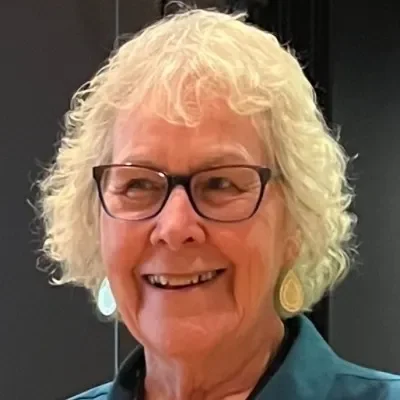
Frances Jeffries, Global Peacemaker
Frances holds a PhD in Counseling from Kent State University and has spent her career weaving together education, service, and activism. She is a Rotary Peace Fellow, a mediator, and an outspoken advocate for nuclear abolition — calling nuclear weapons “the number one public health issue.” She recently marked her 84th birthday by hiking 84 miles of the Appalachian Trail to raise awareness and inspire action. She is also known locally for plunging into icy waters each New Year’s Day to raise funds for ShelterBox, supporting communities displaced by conflict and disaster. Through it all, Frances has shown us that determination, courage, and care can fuel movements for change. Her story demonstrates that grandmother leadership is about both steady presence and bold action.
Transcript
Lynsey Farrell (Host): Welcome to Grandma Magic Live, a special live stream of our podcast from the Grandmother Collective. We’re a nonprofit organization that supports and advocates for a world where grandmother’s power is seen, cultivated, and activated for positive change. Usually, Grandma Magic comes to you as a podcast, but today you’re joining us in real time.
Our format will be a little different. Frances and I will talk for about 40 minutes, and then we’ll open it up to take questions from the chat here on this platform. You might also be watching us from YouTube, LinkedIn, or Facebook. We’re glad you’re here. My name is Lynsey Farrell and I’m your host.
Today I’m honored to welcome Frances Jeffries, a grandmother, activist, and lifelong peacemaker, whose life has been defined by her pursuit of justice and community resilience. Frances holds a PhD in counseling from Kent State University and has spent her career weaving together education, service, and activism.
She’s a Rotary Peace Fellow, a mediator and an outspoken advocate for nuclear abolition calling nuclear weapons the number one public health issue. At the age of 84, she marked her birthday by hiking 84 miles of the Appalachian Trail to raise awareness and inspire action. She’s also known locally for plunging into icy waters each New Year’s Day, to raise funds for Shelter Box, supporting communities displaced by conflict and disaster. Through it all, Frances has shown us that determination, courage, and care can fuel movements for change. Her story demonstrates that grandmother leadership is about both steady presence and bold action.
If you’d like to learn more about the Grandmother Collective, please visit grandmothercollective.org. There you can sign up for our
newsletter, become a member, or join in the many conversations we’re having about older women, who like Frances, are driving change in their communities and across the world.
So, let’s welcome Frances to Grandma Magic Live. So, Frances, I’m just going to throw out an early question of why are you here today? What is the issue that feels most urgent to you right now?
Frances Jeffries: For me it’s nuclear weapons. But I think underlying it, and especially for today, I see the wisdom of grandmothers and people like us, not being utilized fully. And so today I’d really like to talk more about that and about the nuclear weapons abolition. We don’t know much about either one.
Lynsey Farrell (Host): No, we don’t. I mean, you came and joined us at a Grandmother Collective coffee chat, which is just this open forum where people come and tell us about what they’re working on and what are the issues that are driving them. And all of us sat there with our mouths open like, oh goodness, we have not been paying attention. So why do you think it’s so incredibly important that older women take a stand on nuclear abolition?
Frances Jeffries: Let me back up a little bit and say that, until a few years back, I knew a little bit about nuclear weapons. I knew they existed, but honestly, I wasn’t paying attention until I happened, quite by chance, to be in a lecture presentation. And one hour after I entered, I came out knowing information that my family and my friends were completely unaware of. And basically, that what we’ve done as human beings is to design weapons, things that will destroy not just us as humanity, but the entire planet. I really didn’t have any idea of the danger, and I thought, certainly grandmothers don’t want this for their legacy. So that’s how it happened.
Lynsey Farrell (Host): So where did the commitment come from you?
Frances Jeffries: The information I got that night was from a well- known nuclear weapons abolition activist named Dr. Ira Hefland. He, together with some others, founded the International Physicians for the Prevention of Nuclear War, “IPPNW”. And they formed some other coalitions with other groups. That information was what propelled me forward into this work.
My own background was in organizing, in initiating change, in connecting people. I am not a scholar on nuclear weapons abolition,
nor am I the foremost public policy person, but I am a contributor to the networking of people, to pulling people together and working together. That’s the role that defined it.
I think the opportunity for other grandmothers is that there’s a role for you in all these concerns. It’s figuring out what you can do with your own circumstances, and with your own skills and experience.
Lynsey Farrell (Host): I wonder before we move on, because I want to really dig into like a conversation that you and I have had before, which is about your journey to become a changemaker and to feeling like you could participate and make a difference. But, I wonder if others might be interested, as I am, in understanding the scale of the challenge that is being faced currently when it comes to this particular issue that you’re trying to address. Can you give us some detail?
Frances Jeffries: There’s a lot of technical expertise. You’re going to get the simple version.
Lynsey Farrell (Host): No, what’s the thing that makes you feel for this?
Frances Jeffries: So, one of the things is that give or take 200 countries in the world, nine, only nine — fewer than 10 — hold all the nuclear weapons. Everyone else is held in hostage. So, everyone’s in danger around the planet. It’s going to be equal opportunity. Only nine leaders will probably make the decisions, and in many cases, it would appear that a tiny handful of people will make a decision for the entire planet, and that most likely it would happen between only two countries.
So, let’s say there are two hands full of these decision makers. It’s highly unlikely that among those decision makers that there would be any grandmothers. Who could say, “…time out…wait…no...you’re not doing this…..” You can get the sense of the attitude. Again, a good reason to get other voices in there. So then, out of these nine, two hold the most weapons. So, I’m not going to get into naming countries. I want to stay focused on what the danger is because it could be any two.
The weapons come in different sizes. So, let’s basically say they’re small, medium, and large. 80 years ago, we used the first atomic bomb, recorded in pictures of Hiroshima, Nagasaki, and the mushroom cloud. That was the largest bomb at that time. Now, 80 years later, the largest is 1000 times what that was. So just kind of, as best you can in your imagination, imagine not just Hiroshima, but 1000 times out from that.
So, we’ve been told, based on scientific models that of the largest ones, that six or seven, and remember there are 14,000 of these weapons. So, we’ve got this arsenal. Only six or seven could wipe out the entire planet and whatever would remain. So, let’s say you’re among the remaining, there would be no infrastructure left, no buildings, so there’s no recovery left. And the ash goes up high into the atmosphere and creates a blanket over the earth so the sun can’t penetrate, nothing can grow, whatever remained after the first detonations, would starve to death within two years at the most.
You really don’t want to be around for that part. So, there were a couple things in that talk I told you about that got my attention. One, is that one of the audience members asked what you should do if there’s a nuclear attack on your city. And the person said,' “you want to run into the explosion.” And the person said, no, I mean, what should I do? The person repeated the answer, “run into it.” And his remark following that was, “You don’t want to be surviving this.” We’ve seen the pictures of burns and so forth. I don’t want to get into too much grim detail, but I do want you to know how awful this is. And we’ve not even really thought
about what this does to the universe. So, there’s no escape route.
The second thing that got my attention, is, you know, you go along listening and listening, and then suddenly you’re not just listening. Your mind is racing. The International Committee of the Red Cross is the primary convener of organizations to respond to disasters around the world. An earthquake happens and they’re the ones who call the meeting and then they do an assessment, and then usually they go to regional organizations to help with the response. The Red Cross has a template for responding to fires versus earthquakes, versus floods, etc. But, there is the response to nuclear disaster. There is no plan. There
can be no plan. And I’ve said to myself, that’s catastrophic.
So, you say, okay, well let’s say we don’t use them, we only test them, which is probably a silly thing. But anyway, I mean, let’s say we test. So, we look at where these get tested. Typically they’re tested in areas where people have no voice, they have no choice in it, and in the past at least they’ve been misled about what was going on.
None of this is any surprise. But the consequences are very long term. And more recently, we learned from studies that while it’s bad for both men and women, it’s the women who then transmit the effects of the radiation to the next generation. It doesn’t stop with just the individuals who are directly involved. In addition, we know that it poisons the land and it poisons water. And so, the place that you were living and where you’re still staying because you don’t have another place to go, becomes unlivable. And you die a slow death.
And that’s the public health issue. To me it’s equivalent to the kinds of testing that led to the protection of human subjects in research policies, grim experiments on humans, except this is on big groups of humans — and on their land. Those things got my attention, and I thought people have to know about this and understand the choice. I think for most of us, the choice is being made for us because we aren’t in the room where that choice is made.
Lynsey Farrell (Host): So, one of the strategies I know, I definitely feel like I should take a pause after you share, incredibly devastating, information. But we’re here to talk about the efforts that you’re making and that others could be making. Maybe not necessarily on the same issue, although this one obviously is incredibly important, but in anything that they feel that they can make an impact on. So, what have been your particular strategies? Taking on something that is so big that so many people want to pretend is not there. What does it look like? What do you do, on a day-to-day basis as part of your activism?
Frances Jeffries: Some of my colleagues are quite expert in issues related to policy, some in negotiation, some are in the health sciences, and very knowledgeable about that, and some of these things overlap. Again, my piece is to be scanning all this and saying, where can I knit people together? Where can you push the hardest today? And sometimes that means writing or calling US
legislators. Sometimes it means following people on LinkedIn and then making a contact with them. And, in one role I do it primarily through Rotary and through networking there, and because of Rotary’s position as a nonpartisan nonprofit in the United States, they would be limited in what they can say about political issues.
While this is a political issue, the restriction actually pertains to partisan stands. This issue is not partisan. It is universal and it is a serious public health issue. Rotary’s taken many stands on public health issues. It is tricky, because we’re in such a large international organization. There are many national points of view that come into play. My job, I think, as a Rotarian within Rotary is to keep people talking about it and find the place where you can talk together.
Everyone would acknowledge these are pretty bad. Some would posture that the evil, the badness, is justified, and I have to use them against you. It was justified. Not all agree. And so, making sure that people who are quieter about it and who feel intimidated by this justification, have a way to place their voice into the discussion.
One thing Rotary can do within the framework as a nonprofit , and any group could do, is to convene other people to say, “Let’s get together.”
The second thing you can do is connect people. Say, two of you need to make sure your numbers are coming from the same place. Let’s say something simple. So why don’t you discuss which data sets you’re going to use and why you’re using them. Third, we can educate people and give them the information, and Rotarians can do this.
And finally, and this is the part, where I think you and I would come in especially, is we engage people. We get them to answer for themselves and others, “What do you think you could do?” And I’ve explained what I do, but there’s a whole list of things people can do, and there are different organizations to show different ways of acting, and that people can pick what they’re comfortable with, what’s in their locale, whatever.
And if none of this has gotten your attention, you might want to look at what the costs are, let’s say in the United States. There are a couple of websites which you could request through grandmothercollective.org that would, allow you to put in the zip code if you’re in the United States, for your town, and it will show not only how much is going to military spending, but also how much from your town budget from the federal government is going to nuclear weapons.
Lynsey Farrell (Host): And my town budget is going to nuclear weapons?
Frances Jeffries: Your town probably received some federal funding.
Lynsey Farrell (Host): Yes.
Frances Jeffries: Okay. So, if some of that were not spent on nuclear weapons, you could have more.
Lynsey Farrell (Host): I might have more if it wasn’t being sent towards, security or something. Yeah.
Frances Jeffries: Exactly. So, the part you’re not getting is among other things going to nuclear weapons. If that’s okay with you, don’t write to your legislator. If it isn’t, then just scream into the letter and say, or into the communication and say, “I didn’t know this.” And “What do you mean you voted for this?” There are many, many levels.
Some days we have energy and opportunity to act in one way. And some days it has to be another way. I think that’s okay. I don’t think you have to be this committed, driven, person who makes the headlines because there’s going to be thousands behind that to make that work.
Lynsey Farrell (Host): Frances, I know one of the things that we kind of hypothesize about is that the reason that older women can have a powerful place to participate in some of these big existential challenges and the, and the local maybe less existential issues, is that there is a power in the remembering. That grandmothers can help us to remember and tell stories. And I know that that was something that you were really working on with people who were the grandchildren of people that had been affected by a nuclear disaster or accident or things like that. Can you speak more about that?
Frances Jeffries: Those people were, actually victims of the testing, though talked about a little bit ago. And in virtually every case, and there are several places around the world where that happened, they’re now grandparent-age people who were told not to speak about what they experienced and so they were silenced. And fast forward and skip a generation to their grandchildren. The grandchildren began saying, “You know, there’s a whole period of time you don’t talk about. What happened during that time?” And the grandparents said, “Well, no, nothing really, you know.” They brushed it off until finally, one would finally speak out and say, “Oh, it’s time to tell my story, because now this is my grandchild asking.”
And then these grandchildren, through the network of people who work worldwide on the abolition of nuclear weapons, began to be acquainted with each other and they now work together. But that’s only recently that they’re working together. They have produced some films that are available and a simple search on the internet will bring you to the films on the nuclear weapons testing and the effects on populations there.
But that part I think is really important. And I think it underscores the importance that we agree on about the storytelling. So, you’re telling both your personal experience, but also pointing a person to the larger issues, balancing those two things and then bringing all those groups together.
Lynsey Farrell (Host): Yeah. I mean, I think that’s why we are having this conversation today, is to understand, here’s this big challenge. There’s a lot of people out there, maybe not enough, maybe not everyone trying to make some change in it, but uniquely that there’s a role for older women or for grandmothers to play in this. Did becoming a grandmother shape your activism?
Was there some sort of shift in you? A lot of times I have conversations with people and they’re like, yeah, all of a sudden, I realized I had not been paying attention. Or is this a piece of a lifelong thread for you?
Frances Jeffries: I’d say it’s a piece of a lifelong thread. It’s easy and more popular to say, “Oh, it was this epiphany when I had my first grandchild.” You know, I think the timing coincided for me to become a little more active at the time that the first granddaughter was born. As far back as I know, I was curious about things and was the person who would explore, would open the door. Particularly in my generation, we were supposed to be sitting still and I wasn’t. And then that fast forwarded. So, the first time I can remember thinking, “Oh my goodness, I believe differently than that person,” and standing up for it, but I didn’t plan it. I wrote a paper on Rosa Parks and her activism.
It was almost like a little report. It was a very primitive thing that I wrote. And my teacher came over, leaned over my desk and said, you’ll have to change your topic.
Lynsey Farrell (Host): And is this like right after it happened? Around the time it happened. So, it’s really present in the public.
Frances Jeffries: Yes. My source material was a Life magazine article, which would give you an idea of the level of sophistication of the high school I was in; I was just basically regurgitating words. It was almost like a book report. And I shook my head no. I don’t know where that came from because I was terrified of him. I was at the time really shy and felt pretty awkward, and I just shook my head no.
And he said, then I will fail you in this class, which was required for graduation, and I needed to graduate to go to college. Everyone in the class I think was frozen, you know, wasn’t looking up, but afterwards I thought, where did that come from? I know I did not have it, but it just happened.
And then when I got to college, I was fortunate enough to have a couple of professors who nurtured that kind of thinking. And, over time, because my childhood experiences involved lots of moving and traveling, I was more interested in global things than I was local because I didn’t ever know where my locale was going to be.
So, I got interested in international relations and I kind of carried that with me. But the timing was such that not only did the civil rights movement explode around that time, but feminism, all the environmental concerns, and all the related pieces to that. And you know again, walking through the door, going to a lecture — so it was nothing. There was no profound opportunity. I didn’t meet anyone world famous. I didn’t become world famous. You don’t have to do that.
So, do you have time for two quick examples? These aren’t related to nuclear weapons, but I’ll tell them because I want people to know you just have to take whatever opportunity you can find. This all predates any technology. So, meetings were in person, and everything was on paper. And somewhere I learned that women in the state I was in, by law, were not allowed to work in a job where you might have to lift more than 40 pounds.
I lifted 40 pounds with two kids and two bags of groceries. I’m thinking, are you kidding? And so that was step one. And then we were at the intersection of two highways, an East-West major artery and a North-South. And so, there was a lot of trucking in that area.
It meant that women could not work on the loading docks, but you could work in McDonald’s. Now you might lift 40 pounds worth of potatoes and whatever else you had to do without mechanical assistance, but on the loading dock, you had a forklift. The difference in pay was that at that time, McDonald’s paid $2.10 an hour. The loading dock paid $19.75 — with benefits. With benefits. So, it was protected by the Union, full healthcare, etc. And a woman couldn’t work with the forklift, but shecould work at McDonald’s, and of course you could do your unpaid work at home. And I thought, this is stupid. I didn’t know where else to go. So, I went to the unemployment service, with two children in tow with me; the other one was in school. We walked in and I said, “I need to talk with someone about how to change this legislation.”
And the person said, “Well, it’s not actually our office that could do that, but you could go to the Congressman.” So, I went and asked, “Did you know this?” And the person said, “No. I never encountered this.” So it was, you know, it was an obscure rule that you wouldn’t encounter until you couldn’t get the job.
So, the law was changed. And then I was working with a women’s group in the community and we began to announce it every place and made sure the union knew. And it wasn’t easy to be a woman on the loading dock for a long, long time, but you could have your job. And if they could tolerate the nonsense, they muddled through and they kept their jobs. So, it’s just sometimes these simple things that you can see, you just can just move.
Lynsey Farrell (Host): You also told me a story that I have been thinking about a lot, about what you were doing in your town when people started to try to scare off families. Like kind of a redlining situation and that you started to create community to address that.
Frances Jeffries: Right. Another person was more knowledgeable and more savvy about that sort of thing. We were in a community that was divided by an interstate highway being constructed, a very common story across the United States especially at that time. So, people were displaced from that area. Most were people of color, and they were encouraged to move up the hill to our community only. But if you moved up there, then you could only buy in certain pockets of neighborhoods.
But when that happens, you don’t have to read very far to understand that you get “white flight” and all the property values go down and so forth. And it was an older section of town where there had been lots of very, beautiful trees, a variety of sizes of homes — all very nice. And it had been “the place” to live for a long time. And there were also a couple of religious groups that organized themselves around their places of worship. And so, they wanted to stay there, but they were afraid and the same stuff. And so, when she announced that we’d have this meeting, I thought, this is something that I want to help with.
Plus, I was motivated. We had just put all our money into a new home in that area. And, I had a little bit of that kind of investment. I thought, wait a minute, you know, this is my community. What do you mean property values are going to drop? And we bought there because we really like the richness of it.
And so, we began just having meals together and the high school cooperated by letting us use a cafeteria. I wasn’t working on those details but just know that there are places that would welcome that.
And honestly, if you can’t do that, you can always ask for part of your street to be blocked off, and you just pull tables out and have a party in your street. If you can’t go to a building, then figure out something. But get people together and let them see each other and play each other’s music and whatever you want to do. Variations on the food thing where you can do music and stuff where you can dance or do artwork.
Lynsey Farrell (Host): — I remember you said you had to bring enough for six people. Bring a dish that could feed six people, which is like enough for a family, and therefore you’re really just showing up.
Frances Jeffries: It’s showing up with your own.
Lynsey Farrell (Host): And with your own dinner, it’s no expense and that way you said that you did this many times. It was a lot of dinners.
Frances Jeffries: I don’t remember now exactly how often we did it. It seemed for a while it felt like almost every week — I think it was probably every two or three weeks. But you can make up your own schedule. Again, do what your community and your weather allows. But let people come together. And there were fewer constraints about food and that sort of stuff then than there are now.
Lynsey Farrell (Host): It doesn’t mean you can’t find a way around it.
Frances Jeffries: And I think, again, coming back to the Grandmother Collective. I can get that among us, there are people who would help facilitate that, just as we help facilitate difficult conversations like nuclear weapons.
Lynsey Farrell (Host): That’s what I wanted to end on. Frances, what is your dream? What would you like other women to know, who are trying to figure out what their legacy could be? I don’t really like the word legacy, but the thing that they’re really going to leave for the next generation. What would you dream when it comes to thinking about this thing that you’re really passionate about?
Frances Jeffries: I would say, do something. And it doesn’t matter what. There’s plenty of work. I’ve given you lots about my own passion right now, but it’s not necessary for everyone to be doing that. Grab hold of what you can and just begin. And I would say, taking a lesson from my own experience. Don’t hesitate to call people. The worst that happens is they don’t call you back or they don’t write back, and then you just move on to the next resource, and the next resource, and eventually someone will connect with you. If you’re in the United States, especially in Canada, I would urge you to use your public library as a tremendous resource and, one in my view, underutilized.
And I’ll put in a pitch for two dates, important dates coming up. One is the annual International Day of Peace on September 21st, and the second is the annual International Day for the Total Elimination of Nuclear Weapons on September 26th . The second one is a little harder for people usually.
Ask your library if they would do a film series for you. And there are a number of films that are personal testimonies. They feature some of the groups we talked about earlier. And then invite someone to moderate a conversation. And you could do that more than just on September 26th, but focus on that. So those are just a few ideas, but just do it.
Lynsey Farrell (Host): Because this is the 80th anniversary of Hiroshima. Right?
Frances Jeffries: The bombings actually happened in early August, and then the testing of the bomb made famous in the film, Oppenheimer, was in late July. Sort of a week later, they dropped the bomb on those two cities.
Lynsey Farrell (Host): I mean, one of the things I think I dream of is that, you know, we can build a network where all these issues are amplified. So even if this isn’t the one for you, it doesn’t mean you can’t now take this new knowledge and drop it into your dinner conversation. Let your friends know what you learned when you were having coffee. Frances, let’s see what we’ve got in the chat. Oh my gosh, there’s so much.
Linda says, “Frances, you talked about community building through bringing people together. Could you expand on the results of that community building, the benefits that you saw from that?” So, I guess that question came up, yeah, right around the time that we finished. You want to expand on anything related to that?
Frances Jeffries: It’s really important to go in with an expected outcome. So, for example, if I give this talk, what do we expect? What Iwould hope is that people would respond to grandmothercollective.org and say, “I’ve committed to writing 10 letters. I’ve called my legislator, I’ve scheduled an appointment, I’ve gone to the library and scheduled a film series.”
I want to know what action happened from this, and that to me is the most important metric. And then following that, I want to know what you expect from that action. So, for example, if you go to the library and you have a film series, do you ask people to stay and write 10 letters, 10 emails, there are tons of templates of letters. So, it’s not like they have to write this whole letter. Basically, you’re copying it, tweaking a little for your own voice and then sending it in. Do something that pushes something forward. Don’t just attend and take it home.
Lynsey Farrell (Host): Karen, just put in the chat her email, so if people have actions or expectations of their actions and expectations, they can forward those on to Karen and I’m about to put up our website so folks can also subscribe to our YouTube, follow us on social media, sign up for our newsletter, and get involved in connecting with a bunch of women who are trying to make change throughout the world.
Alex asks, “For the grandmothers listening, and I guess you too, Frances, because you’re a grandmother, what are some ways to involve children and grandchildren?” I think this is a critical question that I wish I had asked, “…so the next generation understands these dangers and is prepared.”
Frances Jeffries: Well, it’s pretty hard to talk to young children about nuclear weapons, but what you can talk about is that sometimes people think that they feel in danger and they hit back at a person and then that doesn’t have a result that you really wanted. The other person hits back and so forth. But you can make some choices if you sit and talk together, you can make some choices. If you say, this looks like it would work. Let’s say as a deterrent. But it’s actually too dangerous, so we can’t have it. And children understand that kind of thing. They understand what’s dangerous and certainly by the time they can verbalize.
And so, I think you talk in more general things, talk about our accountability to each other, as long as we’re on the planet. And maybe beyond, too. But I’ll say just for now, as long as we’re on the planet, we’re accountable to each other. And so, helping children say, what does that mean in their experience, you know?
And then how do you get them engaged? And I think as a parent and grandparent to understand that no matter what you aspire your child to do, the most important thing in my view that you can instill in them is that they’re a world citizen.
And I like to say they’re a universal citizen, but you can take your choice. But if every child believed that they were a world citizen first, and they might have an occupation as a physician or is a podcaster or whatever, they, whatever it is they want, that’s just their occupation. It’s not their life. Their life is to be a world citizen.
Lynsey Farrell (Host): You know, it reminds me at the very beginning of this conversation, you were saying, maybe they believe that having nuclear weapons is a thing that like they want to pay for or that they want, that’s important, for our security. The title of this was that you’re a peace builder or peacemaker or something. We haven’t really talked about how we shouldn’t need to have that justification. Right. And I think what you’re speaking to is how do we raise a generation and support a next generation that doesn’t feel that there is a need to protect ourselves with something so dangerous.
Frances Jeffries: Suffice it to say that there is a ton of material on what would support that individually and in groups of people, and then what, would knit all those groups together worldwide. We typically don’t practice that even as parents and communities, we don’t have an active practice.
Usually there are a few communities that teach non-violence, teach conflict resolution. But it’s not really practiced worldwide. And those are, right now, they are anomalies. And right in 2025. We also aren’t doing much to emulate those and say, what could my community do? What can we learn from those? So, I think part of it is, has to be, a willingness, and a certain level of trust, to take the first steps. That’s in short supply. So, if you can’t do anything else for your community. Try to do things that will build the trust that you need to move forward.
Lynsey Farrell (Host): Alex’s second part of the question that I didn’t get to, but I actually think is also really important. “Is there any work that’s being done about what it means to prepare?” I mean, you said like, there’s no emergency plan for what happens when a nuclear weapon.
Frances Jeffries: No. You know, in the fifties we used to have these drills in school and to protect yourself from a bomb, which was probably the atomic bomb. You were supposed to get under your desk.
Now, if you look at the pictures of Hiroshima in Nagasaki, your little school desk was not much protection. In fact, it was an exercise in futility. People also built bunkers. And we had a civil defense force. It was an all-volunteer civilian group, and they promoted these, I mean, in earnest. But again, after you come out of your bunker and there’s nothing, nothing, nothing left except ash. There won’t, be rubble because these weapons evaporate everything. So, there’s nothing. It’s really hard to explain because we’ve not experienced anything like it. And I think what I and others, who are working to abolish these weapons, have to say is, “You cannot have these, because they are so, so destructive.”
Lynsey Farrell (Host): What’s on your plate for your next major project?
Frances Jeffries: I guess, I’m always scanning things. Right now, in this matter of keeping trust has a lot of my attention. Because, you know, I can say all these things, but if there’s no trust in the community and if there’s no trust in other communities, especially among decision makers, then it doesn’t matter what we decide because you distrust so badly that you won’t act on it anyway. So that’s got to turn around. It’s got to be a certain level. In my own experience, I’ve never observed the levels of trust so low as they are now and that’s worldwide, I would say. But you can’t function in distrust because you even doubt yourself after a while. And it means you’re not valuing yourself. That’s a whole other thing.
So, I just work on that a lot and try to weave that into opportunities. I have to speak about opportunities; I have to have conversations to influence programs. And the second thing is more of an action than what’s on my plate, is I would urge people to get online, ask the questions you want to ask beyond these, webinars and chats and other things with groups that you think are similar like the Grandmother Collective.
And you know, honestly, I showed up because I was curious and I wound up, bringing the conversation to a bit of a screeching halt. But, you know, you’re not sure if you’ll be invited back again, but here we are and I think because people on most of the sessions I’m on are listening for something that will be a breakthrough. And the other great thing about that is that generally there are people with great hope and great energy and, full of intent.
Lynsey Farrell (Host): Yeah, I find that truthfully, the work I’ve done with grandmothers and older women has been the most hopeful work. It’s work, I think maybe getting it from the lens of someone has gone through some cycles of life. It makes you believe that actually, things are never static. What we are currently experiencing doesn’t have to stay this way, that there is an opportunity for change. I have a question from Barbara. She says, “Can you describe the strategy of the back-from-the brink movement?”
Frances Jeffries: I’m peripheral to that. I’m, you know, I’m not central in the planning. I would say go to their website. But basically, right now they’re working with the US Congress to make some changes. The United States possesses the largest number of nuclear weapons, and without the United States taking some action that would begin to eliminate those, the other countries are not going to follow suit. That’s not a guess. They’ve actually said that, and they certainly behave in that way. So, getting our Congress to do that and to at least, suspend the expenditure of the budget. I would go to Back From the Brink (https://preventnuclearwar.org/).
Lynsey Farrell (Host): I think she found it. It’s https://preventnuclearwar.org/.
Frances Jeffries: There’s quite a bit of information. There are a couple of opportunities to be online with groups that are planning this contact with the legislators through direct contact and through mail, and other opportunities to work on kind of background things. So, if you’re good at graphic design, there may be a role for you in that and there are many other actions, and there’s always fundraising. In my case, I guess I had wearied of making phone calls to raise money, which is why I did that hike last year. I thought once you do the hike, and I thought, I’ll ask people to pay so that I can take this hike, and so I was able to raise what I thought I would raise by making phone calls.
Lynsey Farrell (Host): Yeah, a lot of people don’t like asking for money. There are even really creative ways to do that too.
Frances Jeffries: And I think all you need to do is contact Back from the Brink and or any of these organizations. They’ll respond, trust me. And you’ll find a role for yourself. The other thing I would say is, for the most part, people don’t care who you are or what your past is. They want to know what you can do right now, and will you actually deliver on what you say? And if that happens, that really is the credential for carrying out the work. There’s nothing magic, nothing secret.
Lynsey Farrell (Host): You don’t have to have a master’s degree or 25 years of experience if you care. You’re passionate. You have a computer or a voice.
Frances Jeffries: Yeah. And you can learn what you need for them.
Lynsey Farrell (Host): Nancy, first, she wanted to know if there were letters that you have, letter templates, but those are things that we could push out, for you, after the call for folks that registered. So, if you have some letter templates or things that are happening, we can push that out. But she also wanted to say, “Thank you for sharing. You have depressed me. And inspired me to take some action.” So, we can hold both of those emotions at the same time. Both depression and an urge to make change in the world. Before I close this out, are there any final words that you want to share or, make sure that we are kind of walking away thinking about.
Frances Jeffries: Well, I think, first of all, don’t let people talk about your age. For the grandmothers out there, it’s about your wisdom and it’s about your current contributions. It’s about what you, your capacity still is, and then, you know, thank them for their interest, but that you’ve got other things. You want to redirect the conversation immediately because you’re going to have only a short time that people are paying attention. Maybe two or three minutes and you want to say, let me tell you what I am working on, and I need your help, and I’ll be calling you.
Lynsey Farrell (Host): That actually, like we’ve been saying all along, you’re an asset for all of those things that they think maybe you’re not an asset for. Well, thank you so much. thanks to the audience for joining us. I’m going to put up this last screen so that folks can at least have our website one more time.
We do have a YouTube channel that you could subscribe to, and social media on Instagram and Facebook and LinkedIn. We have a monthly newsletter that is chockfull of stories like Frances’ and has lots of opportunities to engage and get involved. As I shared, we’ve got lots of storytelling programs, a monthly storytelling circle where you can add your voice to our collective wisdom. And this coming Sunday, you can join our monthly coffee chat where we share with others and learn about initiatives around the world. And don’t forget that today’s live stream will also appear on the Grandma Magic Podcast.
So, subscribe wherever you listen to podcasts to catch this and future episodes and listen to the previous 30 some odd episodes with really incredible women like Frances, who are just trying to get out there and make the world a better place. It’s filled with inspiration, insight, and the extraordinary stories of grandmothers who are shaping our world.
Thanks again for joining us live and we’ll see you next time.
Frances Jeffries: Thank you, Lynsey.
Lynsey Farrell (Host): Thank you, Frances.
To Learn More
You may reach out to Frances Jeffries on LinkedIn: https://www.linkedin.com/in/frances-jeffries-86523a14/
And visit these websites:
Back from the Brink (preventnuclearwar.org)
International Campaign to Abolish Nuclear Weapons (icanw.org).